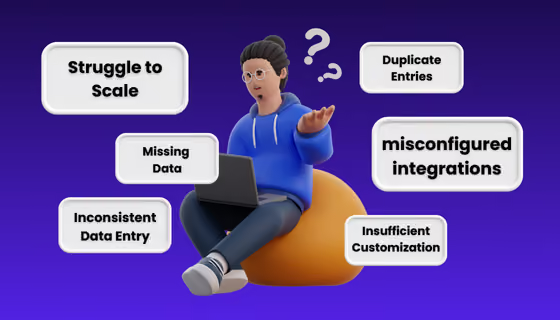
Avoid costly pitfalls when setting up your first CRM. Discover 5 common mistakes RevOps teams make - from poor Salesforce implementation to skipping expert CRM consultants - and learn how to get it right the first time.
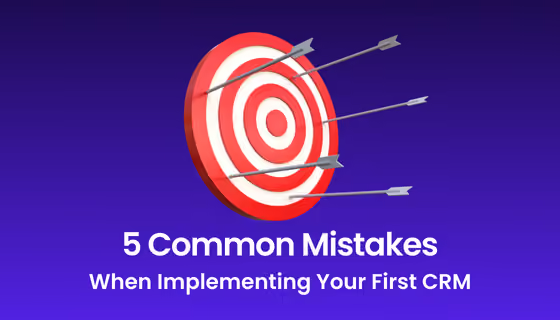
You've likely decided to use a CRM because it will optimize the way you build relationships with your customers and reduce the administrative burden in your business. However, mistakes made during implementation can, at best, reduce the benefits of using a CRM and, at worst, create a logistical nightmare that will hamper your productivity and growth.
Here are 5 common mistakes when implementing your first CRM to help you avoid some of the common pitfalls.
CRMs are designed to be customized to your business to offer a streamlined user experience and tailored processes. One of the biggest mistakes that companies make is using their chosen CRM out of the box instead of taking time to customize it to their needs.
What can you do instead? Here are four starting points:
Make sure you are maximizing the value of your CRM by exploring all the additional features included. Depending on which CRM you have chosen, the number of features available can be overwhelming, so don't hesitate to enlist help from your Customer Success Manager or a trusted consultant who can help you pinpoint your needs.
When working with your CRM provider, explore the ways that your business will stand to benefit from the CRM. It is then up to you how you choose to realize the full value of the CRM. You may choose to get your people using all the features at once, or you may opt to let your people master the basics first before rolling out additional functions. Either way, you understand the possibilities available to you and can make an informed decision.
When most companies start using a CRM, the driving force is usually a desire to help the sales department keep better track of their leads and/or increase their productivity. However, throughout the sales cycle, your sales team learns vital information about prospects, and - configured thoughtfully - your CRM can help you capture this information for your other departments.
Here are some other departments that can benefit from the information in your CRM:
Like most business tools, CRMs are only as good as the people using them. In this case, the quality of the data in your CRM is dependent on how diligently your people enter information.
One of the common mistakes we see companies make is not making it easy on their users to collect important data- either through overly convoluted processes or a complete lack of process! Creating simple processes and minimum standards for your CRM will help ensure that users will be guided to input the data your business needs to operate optimally and avoid poor or duplicate data.
Not every process needs to be fully automated - manual checks and audits can have value too. For example, if Sales management uses CRM reports for sales data and quota achievement, your Sales department will naturally be incentivized to keep the CRM up to date. Knowing that the sale won't count against their figures otherwise is quite the incentive.
Like any other project, you need a way to track if your CRM is working as you hoped. Building feedback and performance tracking into your processes allows you to remain agile. You can make adjustments as needed and take advantage of opportunities that arise so that your CRM and, by extension, your company continues to benefit your business.
Consider how you can track both direct feedback from your stakeholders and usage statistics.
Struggling with where to start to make your CRM implementation a success? Candybox will support you from the design stages right through to deployment for a smooth transition that maximizes engagement with your new CRM. Click here to talk to us about your CRM implementation today.
1. What are the most common mistakes when implementing a CRM?
The big five:
Avoid those, and you’re already ahead of most first-time CRM rollouts.
2. How do I make sure my CRM implementation is successful?
Start with customization. Make the CRM fit your workflows instead of forcing your team to fit the tool. Then:
Success isn’t about going live,it’s about making the system stick.
3. Should I customize my CRM right away or start simple?
Start simple but make it yours. Out-of-the-box CRMs are clunky and confusing for users. Even small tweaks (renaming fields, hiding unnecessary ones, aligning language with your business) go a long way. From there, layer in complexity as your team gets comfortable. The best CRM implementations grow with your business.
4. Why is CRM data quality so important?
Bad data = bad decisions. Duplicate records, missing fields, or outdated info kill trust in the system fast. When reps stop trusting the CRM, they stop using it. That’s why you need simple guardrails (required fields, validation rules, occasional audits) to keep data reliable. Clean data isn’t busywork, it’s the foundation of sales, marketing, and customer success all pulling from the same source of truth.

Candybox Team
RevOps, Salesforce & HubSpot experts
Candybox designs and runs the Salesforce, HubSpot and AI systems behind fast-growing B2B SaaS companies.









Straight answers to what B2B SaaS teams ask us most. Don't see yours? Just ask us.