From pharmacist to Salesforce architect, Dee Hamori shares how she built a remote Salesforce career. Plus tips for admins, consultants, and aspiring architects.
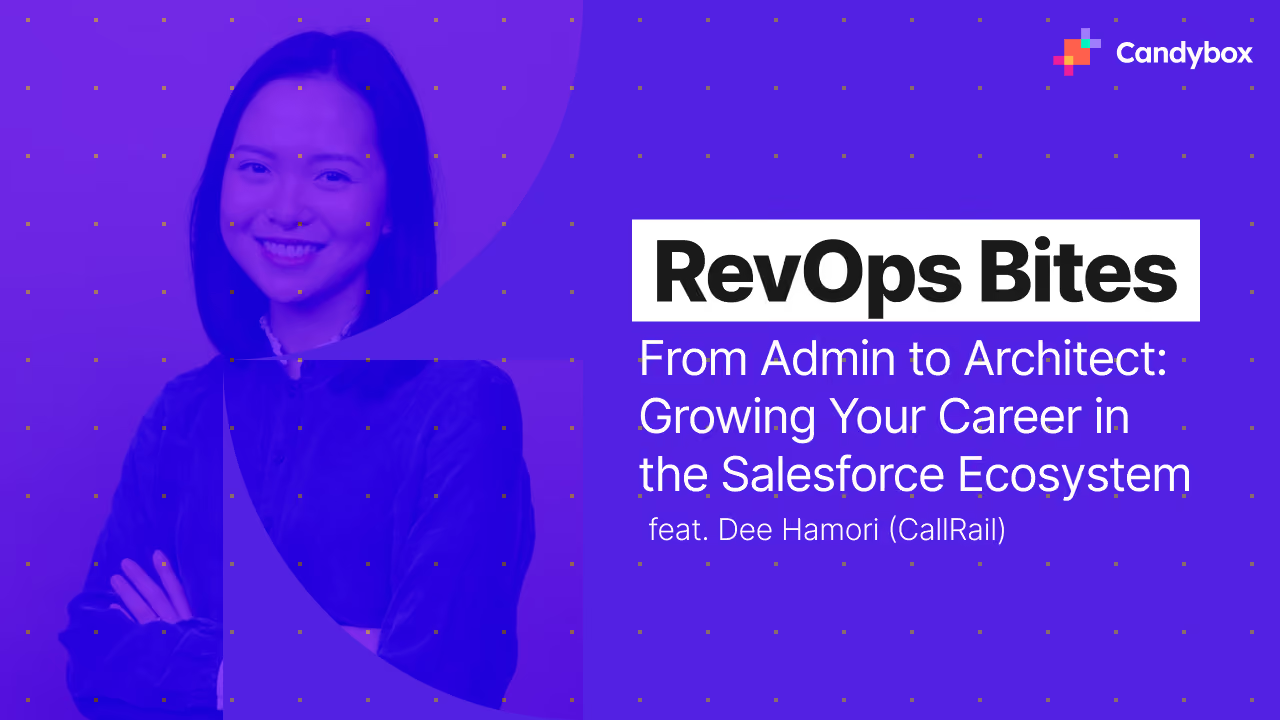
Not every Salesforce career starts in tech. For Dee Hamori, Salesforce Architect at Corel, the journey began in pharmacy school. When COVID hit, she decided it was the right time to pivot. She taught herself Salesforce, landing her first junior admin role, and eventually growing into consulting and architect positions, all while building her career remotely.
In this episode of RevOps Bites, Kathryn sat down with Dee to talk about her path from admin to architect, the trade-offs between in-house and consulting roles, and how to build a personal brand that accelerates your career in the Salesforce ecosystem.
Dee’s entry point was anything but traditional. With a background in healthcare, she realized pharmacy wasn’t for her and started looking for career paths that didn’t require going back to school. Salesforce stood out:

Within months, she went from volunteering at a nonprofit to securing her first Salesforce admin role. Four years later, she’s an architect for a global B2B SaaS companyworking remotely.
Dee has worked both sides of the table. Consulting and internal Salesforce teams, and the differences are stark:
Her advice for those early in their careers:
Two moments shaped Dee’s career trajectory:
Those experiences gave her both technical depth and a stronger presence as a professional in the Salesforce ecosystem.
Dee’s presence on LinkedIn and her blog began as a personal documentation habit:
“Sometimes I don’t remember how I solved a problem. Writing it down meant I could come back to it later, and it just so happened to help other people too.”
That simple start grew into:
Every Salesforce professional develops a unique “superpower.” For Dee, it’s her ability to learn quickly and independently solve problems.
Other standout skills she recommends building:
For those looking to build a Salesforce career, Dee’s guidance is clear:
From pharmacist to Salesforce architect, Dee’s story is proof that non-traditional backgrounds can lead to thriving careers in tech—and that remote work has only expanded those opportunities.
Her journey shows that with curiosity, continuous learning, and a willingness to build your brand, it’s possible to go from admin to architect in just a few years.
👉 Watch or listen to the full episode of RevOps Bites with Dee Hamori

Candybox Team
RevOps, Salesforce & HubSpot experts
Candybox designs and runs the Salesforce, HubSpot and AI systems behind fast-growing B2B SaaS companies.








Straight answers to what B2B SaaS teams ask us most. Don't see yours? Just ask us.