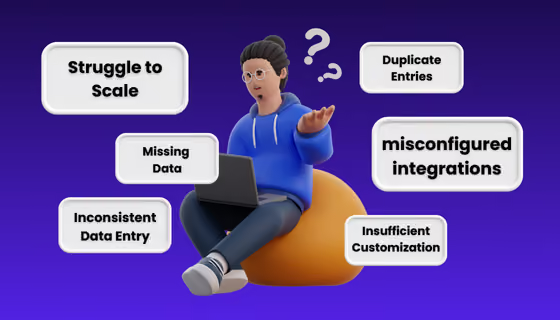
Explore the pros and cons of hiring an external consultant vs. an internal RevOps hire. Learn when it's smarter to outsource CRM strategy and why consultants like Candybox deliver faster, flexible results.

When growth is on the horizon and operational efficiency becomes mission-critical, business leaders often face a pivotal decision: Do we hire internally or bring in an external consultant? For roles like Revenue Operations or GTM strategy, the answer can dramatically influence your company’s agility, budget, and long-term scalability.
Let’s explore the pros and cons of each option - and why, in some cases, hiring an external RevOps consultant like Candybox can give you an edge.
Hiring a full-time employee can seem like a safe bet. After all, they’ll be embedded in your company, immersed in its culture, and (ideally) committed for the long haul. Here’s a more nuanced perspective.
When you partner with a RevOps consulting firm like Candybox, you get far more than an extra set of hands - you get a powerhouse of expertise, flexibility, and ROI.
There's no one-size-fits-all answer to the question of whether you should hire an external consultant or make an in-house hire. The choice is nuanced and depends on your business context, timelines, and strategic goals. Below, we break down some common scenarios to help you decide which path is the right fit.
You should consider hiring an external consultant if speed is essential and you need results right away. Consultants bring ready-to-go expertise and proven frameworks, helping you avoid the ramp-up time that comes with new hires.
External support is also ideal when your internal team lacks deep technical or RevOps experience. Whether you're implementing a new CRM, optimizing an underperforming stack, or launching a complex integration, a seasoned consultant can navigate challenges swiftly and confidently.
Consultants are perfect for project-based or variable workloads. If your business has ebbs and flows, such as gearing up for a major product launch or scaling back during a slower quarter, external teams like Candybox offer on-demand flexibility without locking you into long-term costs.
They also bring cross-industry insights. Unlike internal hires who've typically worked in one or two environments, consultants draw from dozens of client engagements and can apply those lessons to your business in real-time. So if you're building out your strategy or approaching an inflection point where this strategy insight is critical, a consultant could be a good choice.
Finally, if you're part of a PE- or VC-backed company, consultants can be expensed as operational costs instead of adding to fixed payroll, which helps preserve EBITDA and enables more agile financial planning.
On the other hand, hiring internally makes sense when you need someone to be deeply embedded in your company over the long haul. If your CRM processes are well-established and you're mostly focused on day-to-day operations and incremental improvements, a dedicated in-house employee may be sufficient.
Internal hires are also valuable when tight integration with other departments is key. Being present in the office or on internal communication channels full-time can help foster better relationships across sales, marketing, and customer success teams.
If you're in a highly regulated industry or handle particularly sensitive customer data, compliance needs might make in-house ownership more appropriate.
And of course, if you're building out a long-term RevOps department, investing in an internal team may make sense, especially if you have the time and budget to train, develop, and retain that talent.
Ultimately, the decision isn’t only about internal versus external - it's about strategic value. Here's what sets Candybox apart when you're evaluating RevOps solutions:
If you're wondering "Why hire an external RevOps consultant?" or "Is it better to outsource CRM implementation?" - you're already asking the right questions.
The reality is that growth-stage companies need results, not just resources. While internal hires can often be a great long-term decision, but do also come with longer timelines, higher costs, and narrower capabilities. A consultancy like Candybox can deliver faster time to value, deeper expertise, and flexible engagement models - making it the valuable investment for modern RevOps.
Ready to accelerate your CRM strategy without the internal overhead? Let's talk.

Candybox Team
RevOps, Salesforce & HubSpot experts
Candybox designs and runs the Salesforce, HubSpot and AI systems behind fast-growing B2B SaaS companies.








Straight answers to what B2B SaaS teams ask us most. Don't see yours? Just ask us.