Learn what RevOps really means and why it matters for scaling SaaS companies. Discover how Candybox, a top RevOps consultancy, drives revenue alignment.

Revenue Operations - or RevOps - has quickly become one of the most critical growth engines for modern SaaS companies.
Previously, operations teams tended to focus on a specific functional area such as Sales or Marketing. However, as startups scale and adopt more complex go-to-market (GTM) motions, the need has become ever greater for a centralized strategy that unifies marketing, sales, customer success, and data.
At Candybox, we help high-growth SaaS companies implement Salesforce and RevOps frameworks that drive clarity, alignment, and revenue acceleration across their GTM technology stack. In this guide, we break down exactly what RevOps is, why it matters, and how to get it right.
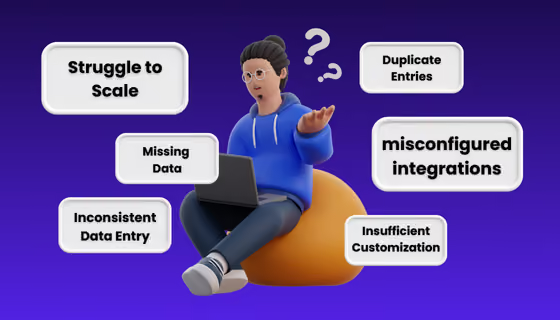
As SaaS companies grow, so do their silos. Sales is running Outreach, Marketing is in HubSpot, Customer Success is in Vitally, and Finance is barely holding it together in spreadsheets. Data is inconsistent, forecasts are unreliable, and teams don’t speak the same language or have the same priorities.
Revenue Operations' goal is to solve that. RevOps brings strategy, systems, and accountability to the full GTM lifecycle, ensuring your revenue engine is running at optimal capacity and allowing your business to scale without stalling.
Ok - but what do the numbers say about the impact of RevOps? Well, according to Forrester, companies that deployed RevOps grew revenue 3x faster than those that didn't. Additionally, research by HubSpot indicates that organizations with tightly-aligned sales and marketing functions enjoy 38% higher win rates and 36% higher customer retention rates.
So by now hopefully the wheels have started turning that strong RevOps practices can be a game-changer for a business looking to scale. But what is RevOps exactly?
Revenue Operations is the strategic alignment of people, processes, platforms, and data across your entire GTM team. It ensures marketing, sales, and customer success are all "rowing in the same direction", using the same systems and aligned processes, and measured by the same unified KPIs.
Exactly what RevOps does and does not encompass and how the subfunctions can be sliced and diced is subject to vigorous debate, but here at Candybox we envision three core pillars of RevOps.

Many companies see RevOps as a cost center, something you only hire when you're at a large revenue number like $50M ARR. However, as this excellent article from Andreesen Horrowitz outlines, hiring RevOps early helps avoid a number of business-critical pitfalls.
As early as your Series A, you likely already have:
Investing early in RevOps allows you to create the foundation for:
If you invest earlier, it is easier and - over the long haul - cheaper to put these foundational pieces in place. Unfortunately, the longer you wait, the harder and more expensive these issues become to fix. Companies that come to work with us at Candybox at a later stage (e.g. Series C or onwards) will often have many of the following difficulties:
And that’s only the tip of the iceberg.
Now that we've outlined what RevOps is and why it’s important, let's talk about what RevOps looks like in practice. Going back to the Three Pillars, here are some examples of real-world RevOps use cases:
Sales onboarding program design: Creating structured onboarding flows with CRM training, lifecycle definitions, and playbooks.
Revenue enablement content library: Building a centralized library of email templates, call scripts, and ROI decks tailored by persona.
Team-wide SLA alignment workshops: Facilitating cross-functional sessions to define lead response SLAs, CS handoff expectations and so on.
Org structure design for GTM ops: Working with leadership to clarify roles like Sales Ops vs. RevOps vs. Enablement.
Ongoing trainings & change management: Ensuring that as new tools, processes, and strategies are rolled out, everyone at the company is bought into the vision, understand their role to play and has the tools and capabilities to be successful.
GTM tech stack design and implementation: Analyzing the current and future needs of the company and selecting and implementing the best tech vendors to build a high-ROI GTM tech stack.
Lead routing process design & automation: Implementing logic that assigns inbound leads based on territory, round robin, or ICP scoring.
Quote to Cash workflows: Designing sales processes, implementing CPQ tools or functionality, designing and standardizing deal desks, approval processes, and sales to success handovers.
Lifecycle stage management: Standardizing lifecycle definitions across all tools and enforce them via automations and validation rules.
Salesforce & HubSpot sync optimization: Cleaning up API mapping, deduplication rules, and trigger timing to reduce dirty data.
Forecasting model implementation: Building custom opportunity stages and forecasting dashboards for weighted pipeline analysis.
QBR reporting automation: Creating dashboard templates that auto-pull CSAT, churn risk, usage metrics, and upsell potential.
RevOps maturity audit: Assessing current GTM tools, handoffs, and data quality to map out a 6–12 month roadmap.
Data enrichment model design: Mapping out and implementing data pipeliness to feed the business with reliable and actionable data, and putting workflows in place to ensure ongoing data cleanliness.
KPI framework development: Define and document shared success metrics (e.g., MQL to SQL conversion rate, CAC, sales velocity).
Revenue attribution modeling: Build multi-touch attribution dashboards that track influence across lifecycle stages.
Capacity & headcount modeling: Use historical sales data to inform SDR/AE hiring plans based on pipeline coverage ratios.
Compensation program design: Designing and understanding which compensation models will work best for your business.
Board-level metrics dashboard: Build one-click dashboards for execs and investors showing ARR, churn, LTV/CAC, pipeline velocity.
| Role | Focus | Scope |
|---|---|---|
| Sales Ops | Sales process, CRM upkeep | Sales team only |
| Marketing Ops | Marketing processes, martech, marketing to sales handoff | Mostly Marketing |
| RevOps | Full GTM strategy and execution | Sales, Marketing, CS, Ops |
Think of RevOps as the operating system that your GTM teams and systems run on.
Especially in startup environments, it can be hard to know when to hire your first RevOps role. Too early and you will burn runway without significant ROI; too late and you will begin to experience all the issues outlined earlier in this article.
Here are a few different company stages and signs that it may be time to make your first RevOps hire:
Some signs we often see when this is the case:
Early-stage SaaS companies often hit this inflection point around the time they raise a Seed or Series A round - when multiple tools are in play, handoffs get messy, and leadership needs reliable reporting.
Investors often look for robust operational frameworks, and a RevOps professional can help establish the necessary systems and reporting structures.
Scaling your sales and marketing teams quickly can lead to process inefficiencies that a RevOps hire can address.
In the early stages, many companies opt for RevOps consultants or fractional services to establish foundational processes. As the organization grows and the need for dedicated oversight becomes apparent, transitioning to a full-time RevOps hire ensures sustained revenue growth and operational efficiency.
An alternative to hiring in-house is a fractional RevOps consultant like Candybox.
You need immediate expertise across multiple systems (e.g., Salesforce, HubSpot, CPQ, billing tools), not just someone who knows one platform.
You're still defining your GTM processes and don't yet have the clarity to hire the "right" full-time profile.
You need speed to execution - consultants can jump in quickly, skipping laborous hiring and onboarding timelines.
You're not ready to manage or coach a RevOps hire and want to avoid mishiring in a critical role.
You have short-term needs (e.g. Salesforce implementation, QBR dashboard builds, process automation) that don't require a full-time employee.
You want access to a team, not just one person - if you need strategy combined with technical expertise, or experience across different SaaS stages and models, a consultany may be a better fit than trying to find a unicorn hire.
You're bridging between funding rounds and need to show operational maturity and GTM scalability without adding to headcount.
In some cases, you might choose to combine both approaches and hire both in-house whilst working with a fractional RevOps consultant. Check out our article on why it can be a great decision to work with an external consultant even if you have an in-house team here.
If you decide to go down the consulting path, it’s good to take some time upfront to clarify what you’re looking for and research who might be the best fit.
The best RevOps consultants for SaaS:
Candybox is proud to lead in this space, helping VC-backed SaaS teams move from chaos to clarity. If you’re looking for more in-depth information to consider, check out our article on choosing the right fractional consultant here.
At Candybox, our primary focuses are under the Tactical Execution and Insights pillars of RevOps.
We can help you get insights into how your current processes, tech stack, and data processes are structured, and understand where the opportunities and gaps lie.
Whether you are just getting started with RevOps or running a seasoned team, some of the following services can help get to the heart of what is holding back your company's operational growth:
Revenue Operations ensures your teams are aligned, your tools are integrated, and your data tells the truth. For SaaS companies navigating complex go-to-market motions, RevOps brings the structure, alignment, and insights needed to move faster and smarter. Whether you're struggling with messy handoffs, unclear metrics, or disconnected tools, investing in RevOps is how you go from reactive firefighting to predictable revenue.
If you’re ready to build a more efficient, data-driven revenue engine, Candybox is here to help with deep SaaS experience built across hundreds of projects with scaling tech companies.
🔗 Book a free RevOps consultation

Candybox Team
RevOps, Salesforce & HubSpot experts
Candybox designs and runs the Salesforce, HubSpot and AI systems behind fast-growing B2B SaaS companies.








Straight answers to what B2B SaaS teams ask us most. Don't see yours? Just ask us.